
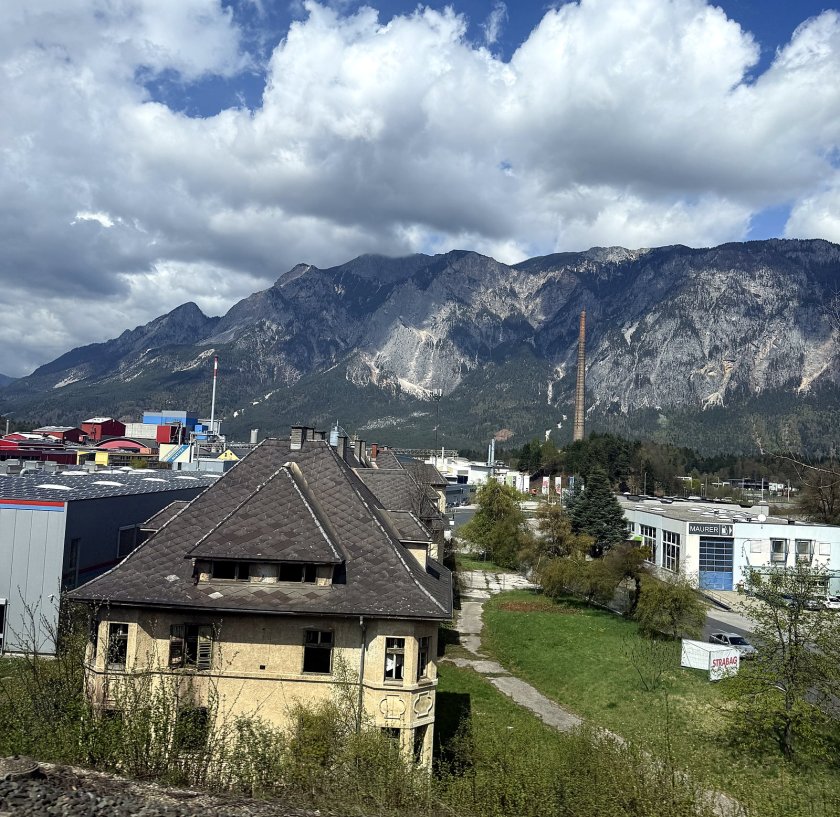
Hey Travel Geeks! In my last post we floated around Venice. Now it’s time to pack up and keep heading north, because the next stop on our April 2026 trip was Vienna, and we got there the best way I know: by train. I wanna talk about the train ride itself, because the contrasts were incredible. In one day you go from Italian countryside to the Alps to Austrian villages and castles, and then you roll into Vienna. Most of these photos were taken from the train window, so forgive a little glare and motion blur. That’s part of the fun!
The route: Venice to Vienna in one seat
We took ÖBB’s Railjet straight from Venezia Santa Lucia to Wien Hauptbahnhof, no changes. I saved the route in the Trenìt! app, which I really like. It’s handy for following along, but you don’t need it. The highlights: Udine, Tarvisio, Villach, Klagenfurt, the brand-new Koralm tunnel, Graz, and finally Vienna, all in about 7 hours.
The Italian countryside
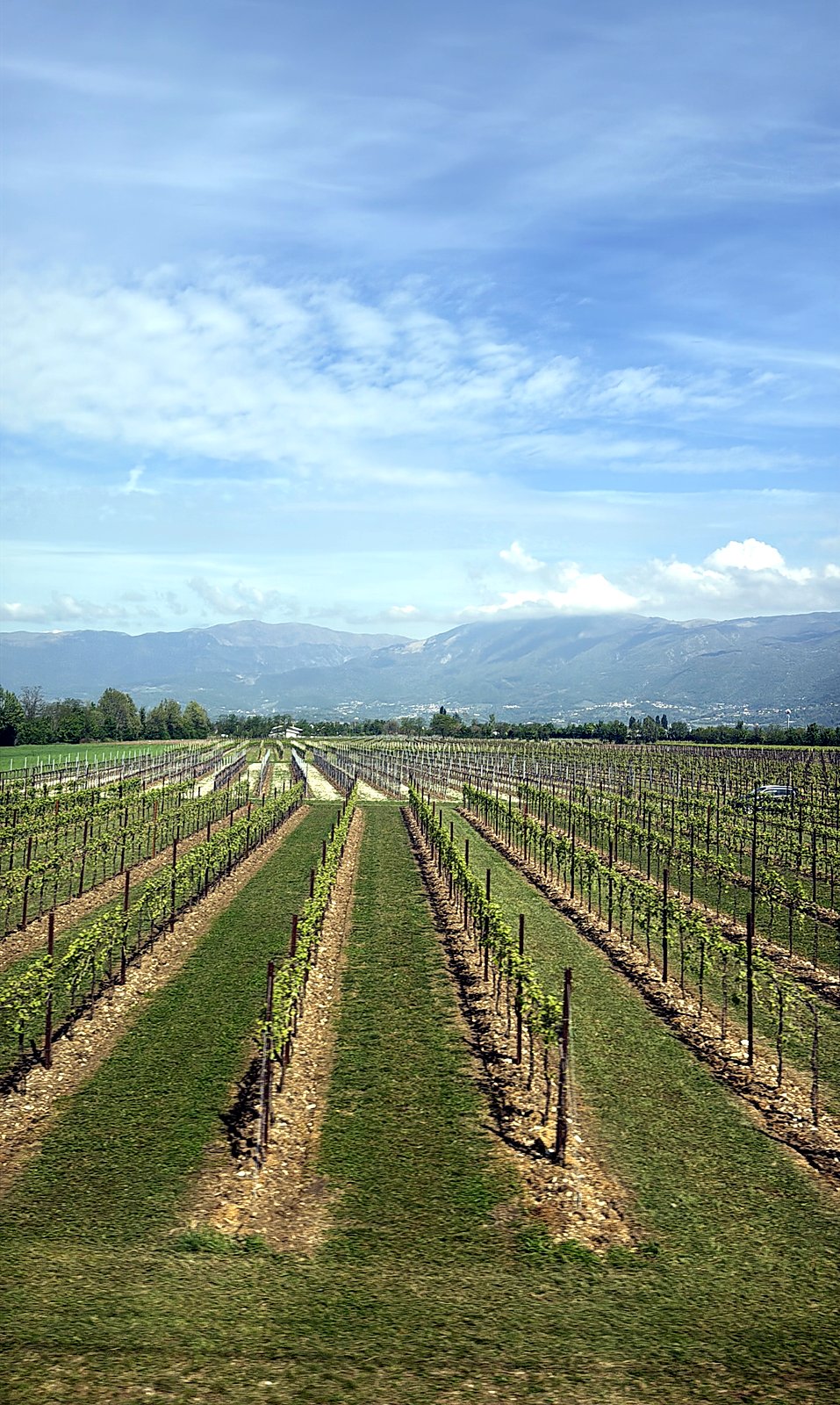
Not long after leaving Venice you’re in the Veneto countryside, and it’s absolutely gorgeous. In April the vineyards were waking up, with neat green rows running all the way to the hills. This is Prosecco country around Conegliano, so yes, I was thinking about a glass the whole time.
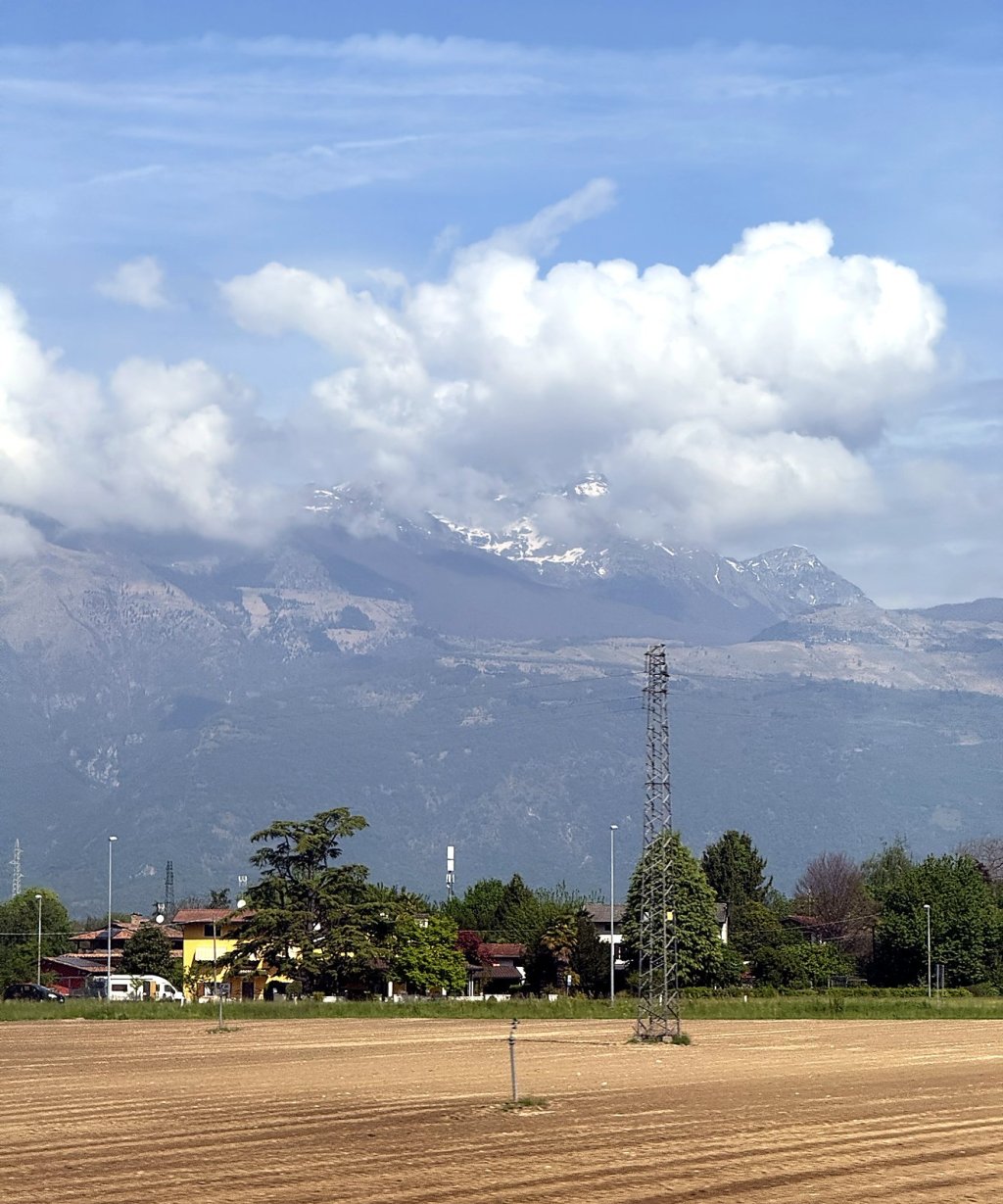
Then the Friuli plain opens up: flat farm fields, little villages, and a wall of mountains on the horizon with snow still on top. That’s the moment you realize you’re heading for the Alps.
Into the mountains
After Udine the train starts climbing, and the scenery changes fast. The valleys get narrow, the mountains get steep, and you run alongside these enormous pale gravel riverbeds with a ribbon of turquoise water in the middle.
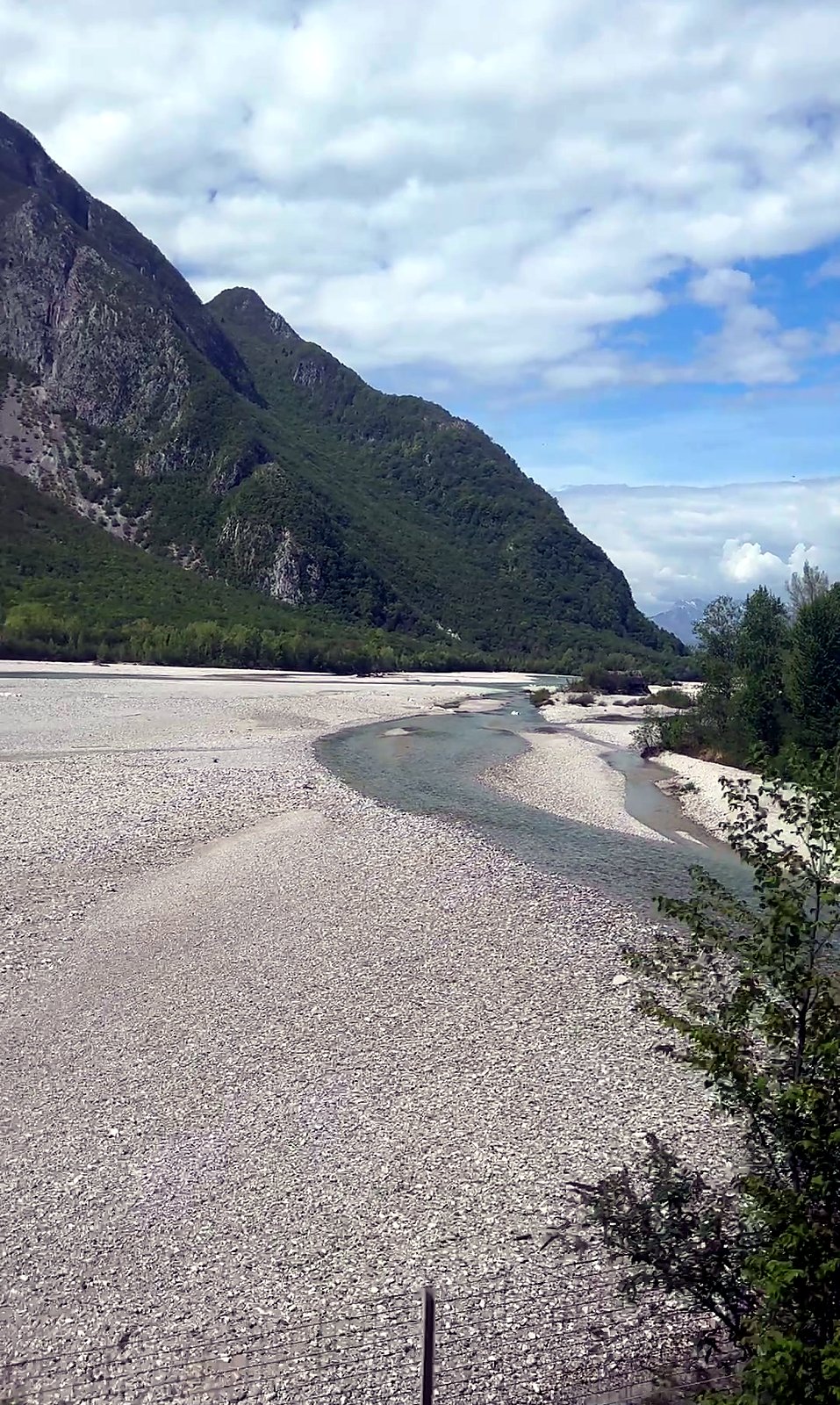
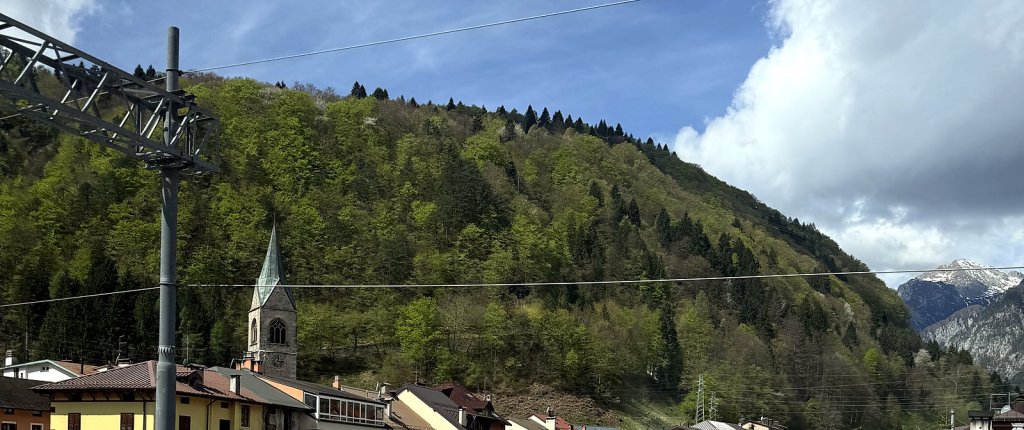
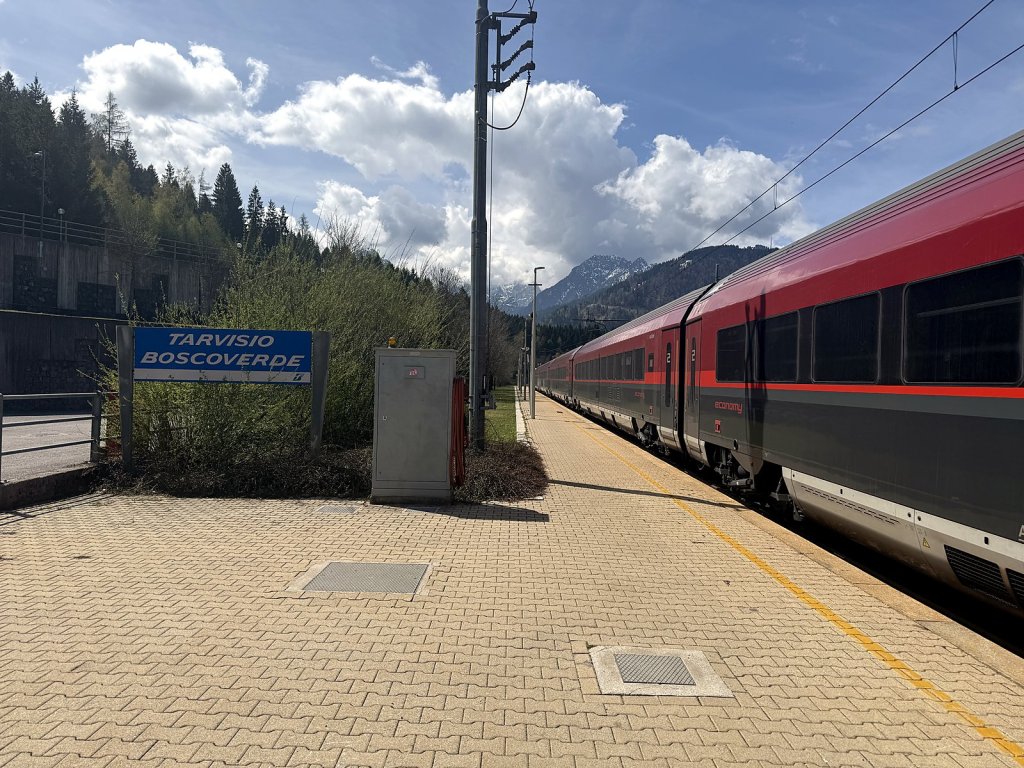
Our last stop in Italy was Tarvisio Boscoverde, right up near the border. Blue sky, big clouds, mountains all around. Not a bad place for a quick stretch and a breath of fresh mountain air.
The Austrian side: villages and castles
Cross the border and suddenly you’re in Carinthia. Steep roofs, tidy houses, and big limestone peaks looming right over town. The Italian side is my favorite (that’s just my opinion of course), but the Austrian side I must admit was equally gorgeous.
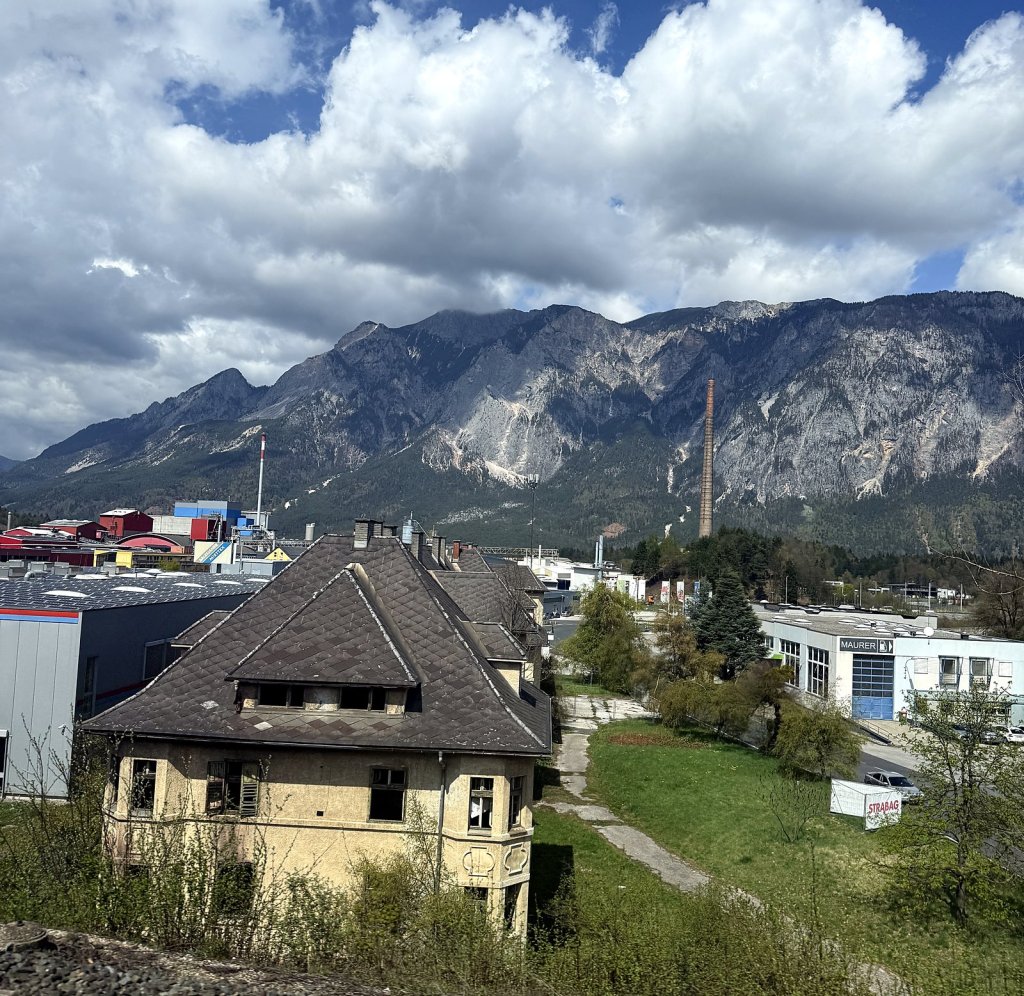
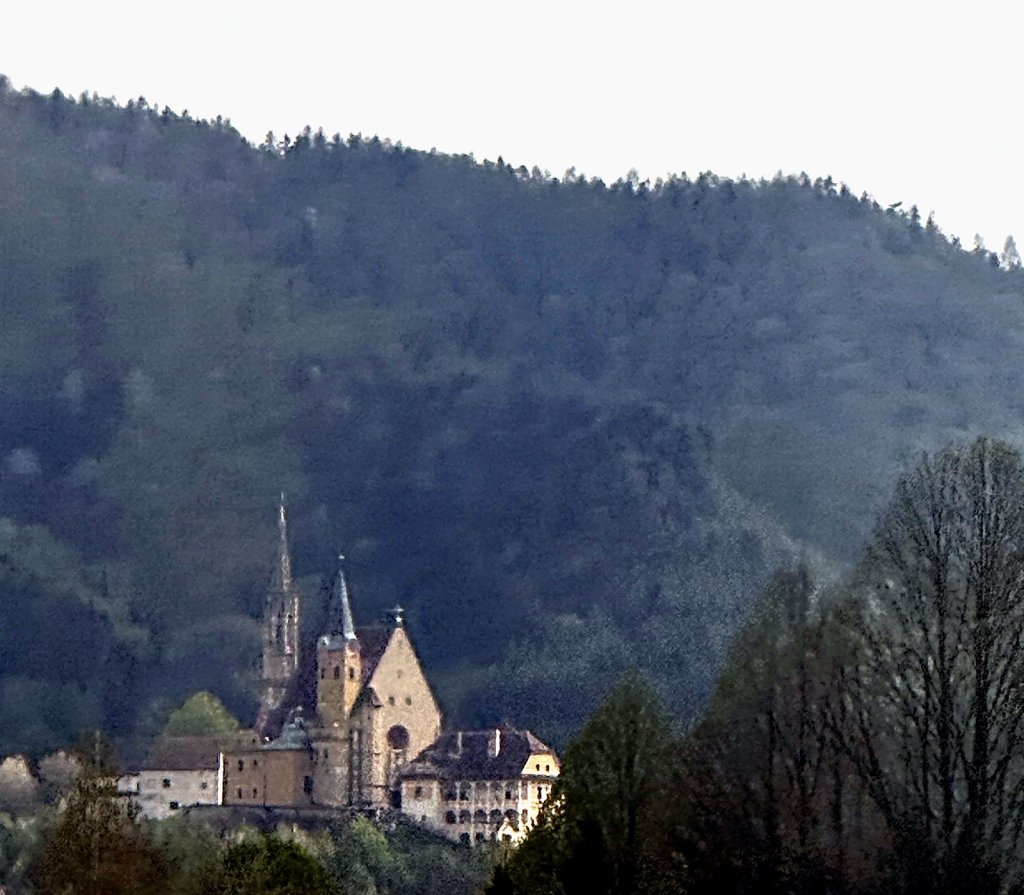
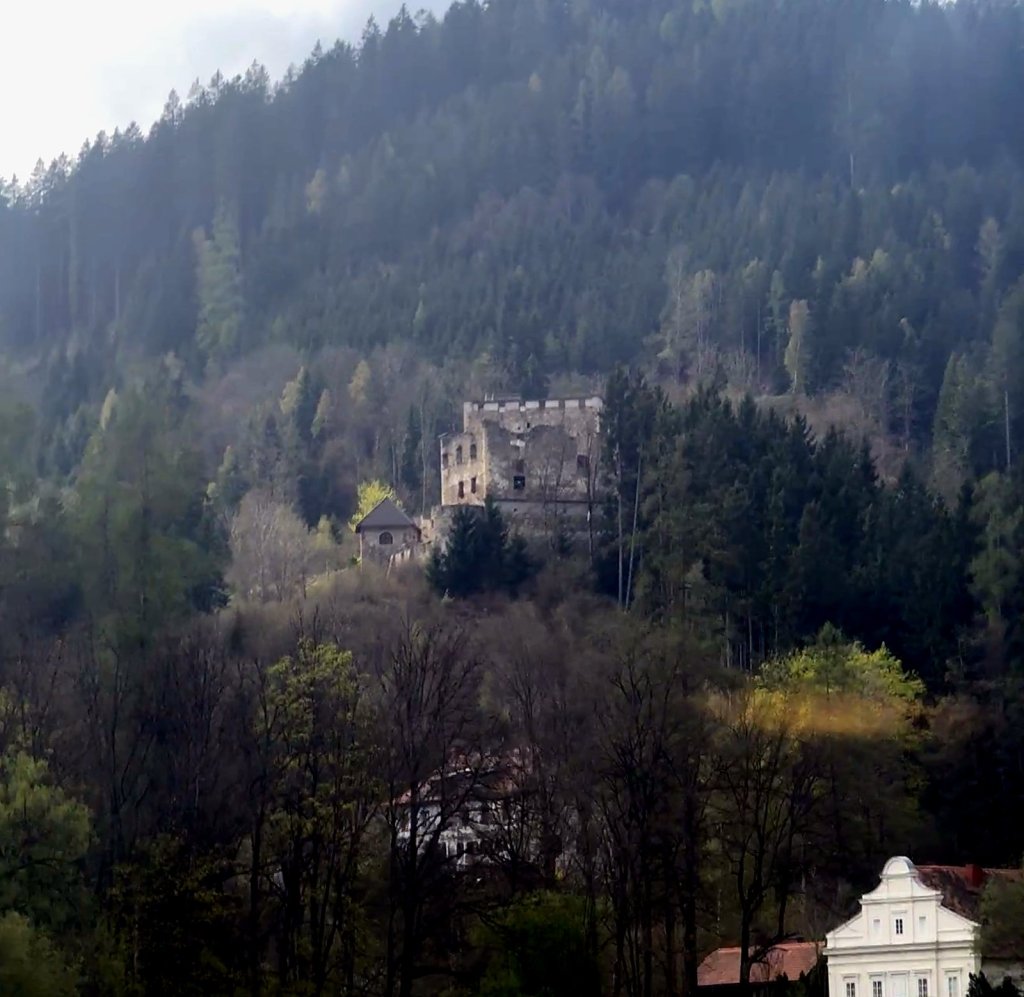
After Klagenfurt the train dives into the new Koralm tunnel, more than 30 km long, and pops out in Styria. North of Graz, keep your eyes on the hillsides. We passed the Gothic pilgrimage church of Maria Straßengel sitting up on its hill, and a little later a castle watching over the Mürz valley. Castle after castle, church after church. This is the Austria from the storybooks.
Arriving in Vienna
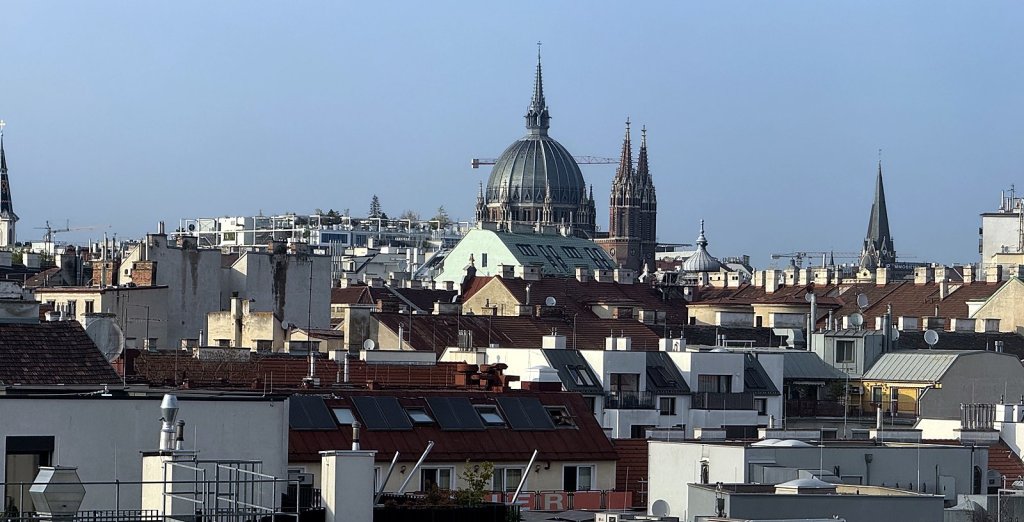
The last big highlight before Vienna is the Semmering railway, opened in 1854 and now a UNESCO World Heritage Site. It’s full of tunnels, curves and stone viaducts as the train winds down out of the mountains. Then the land flattens out, and before you know it you’re pulling into Wien Hauptbahnhof.
Why I’d do it again in winter
This was a spectacular train ride, and I would love to do it in the winter sometime. Picture those same Alpine valleys, the villages and the castles all covered in snow, while you sit in a warm train with a coffee. Just keep in mind that winter days are short, so pick the morning train if you want daylight for the mountains.
Practical tips (as of Oct 2026)
- Which train: direct ÖBB Railjet Xpress, or RJX, from Venezia Santa Lucia to Wien Hbf, with a couple of departures a day. The ride takes about 7 hours. For the scenery, take a morning train, and book in advance to save. There are cheaper ways to make the trip too, like FlixBus or other trains with a change or two. Nothing wrong with those, but we prefer the Railjet we took.
- Journey time: about 7 hours, thanks to the Koralm railway between Klagenfurt and Graz, which opened in December 2025. The Nightjet sleeper is a great option too, you just miss the views.
- Booking: Book at oebb.at or through sites like thetrainline.com. Booking usually opens up to 6 months ahead, and fares work like airline fares, so the earlier you book, the better. I use Trainline to look up trips, but when I can, I usually book on the official ÖBB or Trenitalia apps.
- Pick a window seat. Seriously, that’s the whole show. Grab a window seat on either side, the views are great both ways.
- Railjet has free WiFi, power sockets and a restaurant car. In first and business class they’ll even serve you at your seat. The WiFi portal also has a free audio guide to the Semmering railway.
- Heads up on track work: the line between Villach and Udine is sometimes closed for engineering work. It was closed from August 22 to September 20, 2026, with buses filling the gap. Check ÖBB for alerts before you travel. Me? I’m always up for an adventure, and detours are part of the adventure!
Have you taken a scenic train ride through the Alps? Would you go in summer, or in winter with snow on everything? Share below.
See you along the way!
Travel planning powered by You Can Fly Travels. Ready to plan your trip? Email rob@youcanflytravels.com.


One comment